
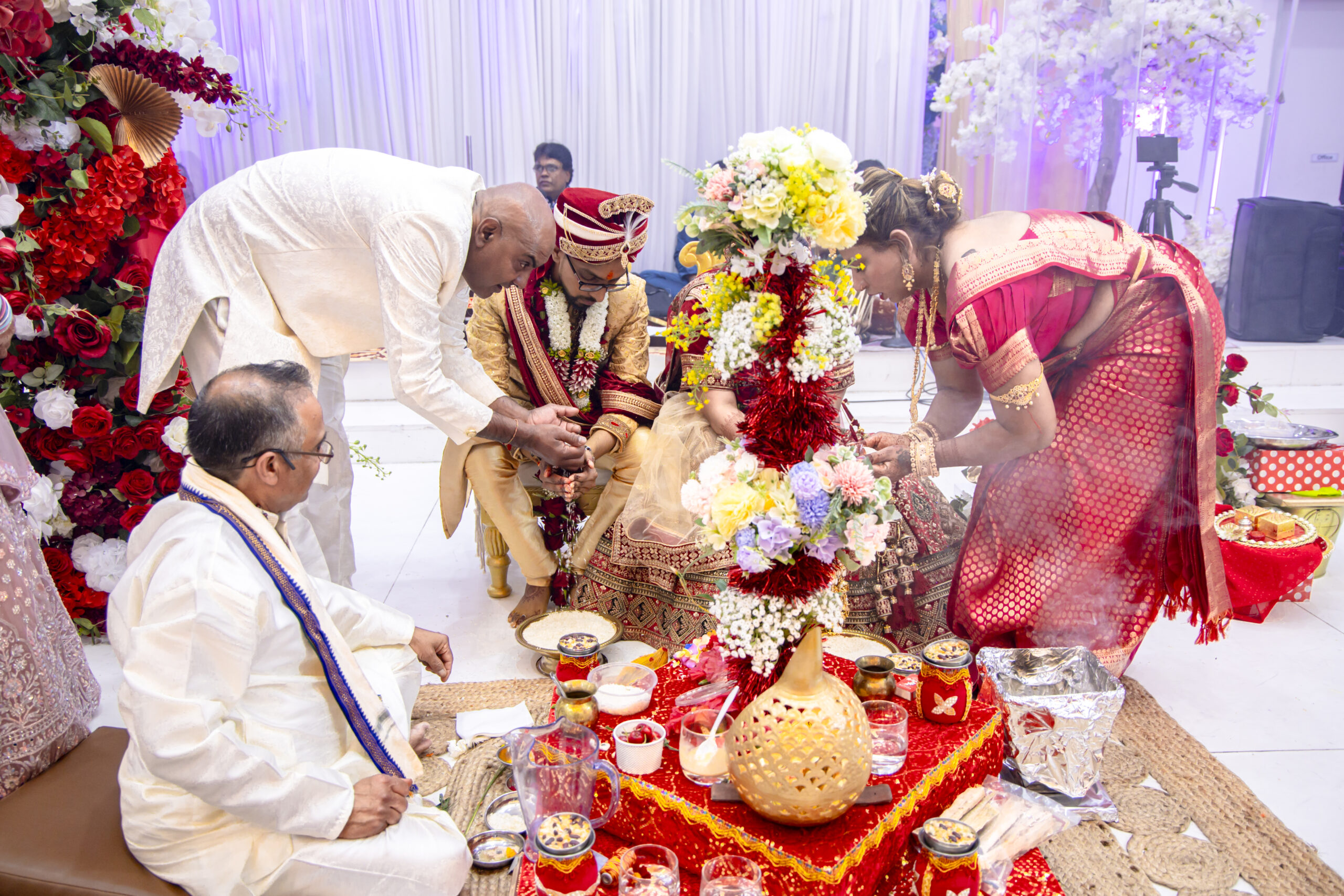
Planning a traditional Indian wedding in Melbourne means coordinating cultural ceremonies, family expectations, suppliers, food, guest travel and the legal steps required for an Australian marriage. Start by setting your guest count and budget, then book your venue and key suppliers early. Occasio by Singh Events is located at 139 O’Herns Road, Epping, and its published venue information describes a Ballroom for larger functions and The Regent for smaller gatherings. Confirm current capacities, inclusions, dates and cultural requirements directly with the venue before making a booking.
Key takeaways
· Start with a guest estimate, a realistic total budget and the dates that matter most to both families.
· Give venue and major supplier bookings 9 to 12 months where possible, especially for popular spring and summer weekends.
· Give your Notice of Intended Marriage (NOIM) to an authorised marriage celebrant at least one month and no more than 18 months before the legal marriage ceremony.
· Plan Haldi, Mehndi, Sangeet, the religious ceremony and reception as separate events with their own timings, suppliers and run sheets.
· Ask the venue and relevant authorities about Havan, Baraat access, dhol, amplified music, end times and any safety or permit requirements. Do not assume approval.
· Use written quotes for your budget. Costs vary substantially with guest numbers, event length, catering, décor, entertainment and inclusions.
1. What should you organise first?
Begin with five decisions: the approximate guest count, preferred dates, the ceremonies you plan to hold, your budget ceiling and who will make decisions for each family. These choices affect the venue size, catering, travel and the number of suppliers you need.
Make one shared planning document with a task owner, due date, supplier contact and payment milestone for every item. Keep contracts, invoices and the latest run sheet in the same place. If relatives are travelling from interstate or overseas, share the confirmed event schedule early and avoid announcing unconfirmed timings.
2. Australian marriage legal requirements
Cultural and religious ceremonies are important to the celebration, but the legal marriage process must also meet Australian requirements. The Australian Government says couples must give a Notice of Intended Marriage (NOIM) to an authorised marriage celebrant at least one month and no more than 18 months before the marriage. Ask your celebrant which identity, date-of-birth and previous-marriage documents apply to your circumstances.
Official guidance: Australian Government, Get married: https://www.ag.gov.au/families-and-marriage/marriage/get-married
Do not leave the NOIM until the final few weeks. If you may not meet the one-month notice period, speak to your celebrant promptly; a shortening of time is only available in limited circumstances and is not automatic.
Religious customs vary between families and communities. An Anand Karaj is traditionally conducted at a Gurdwara. Couples may arrange a separate reception at an event venue later that day. Hindu ceremonies may be held at a Mandir or another suitable location depending on the ceremony and family arrangements. Confirm religious requirements with the relevant religious representatives.
3. Indian wedding checklist: month-by-month timeline
| When | Planning checklist |
| 12–9 months before | Agree on a budget range and guest estimate; shortlist venues; check availability; confirm the number of functions; compare venue and catering inclusions; book the venue and priority suppliers. |
| 9–6 months before | Choose outfits and allow time for alterations or overseas shipping; shortlist photographer, videographer, decorator, celebrant and entertainment; discuss dietary needs; begin accommodation and transport planning. |
| 6–4 months before | Give the NOIM to your authorised celebrant within the legal window; confirm the ceremony format; finalise the main menu direction; discuss stage, mandap, lighting, sound and décor requirements. |
| 4–2 months before | Send invitations and track RSVPs; confirm supplier contracts and deposits; ask about Baraat route/access, dhol and amplified sound rules, Havan/fire safety requirements and event finish times. |
| 2–1 months before | Chase RSVPs; collect dietary and accessibility needs; prepare a seating plan; confirm menu selections, supplier arrival times and the draft run sheet; reconfirm any venue restrictions in writing. |
| Final week | Confirm final guest numbers and payment milestones under your contracts; share the final run sheet with suppliers; pack ceremony essentials; nominate one family contact for venue coordination. |
| Event day | Keep a printed and digital run sheet; identify who handles supplier arrivals, family announcements, gifts, dietary questions and last-minute decisions. |
4. Build a practical wedding budget
There is no single reliable price for a multi-day Indian wedding in Melbourne. The total depends on the number of guests and events, venue hire, menu, décor, photography, outfits, entertainment, transport and accommodation. Treat online figures as broad planning references, not quotations. The draft budget ranges in the earlier version were not supported by a cited market source, so they have been removed rather than presented as verified averages.
Create a budget with these categories and request itemised written quotes:
· Venue hire, catering and beverages
· Décor, florals, mandap and furniture hire
· Photography and videography
· Outfits, jewellery, hair and makeup
· DJ, dhol, live performers and sound
· Ceremony-related costs and celebrant fees
· Transport, accommodation and guest logistics
· Stationery, gifts, insurance where relevant, and contingency
Compare quotes on the same basis: guest count, event duration, menu inclusions, staff, setup and pack-down, equipment, overtime, cleaning, deposits, cancellation terms and taxes. Keep a contingency line and avoid committing the entire budget before supplier quotes are confirmed.
5. Choosing a Sangeet and Haldi venue in Melbourne’s north
Choose a space around the function rather than its name alone. A Haldi or Mehndi gathering may need easy movement, practical surfaces and a layout suited to family participation. A Sangeet may need a dance floor, clear sightlines, suitable sound and a plan for performances. A reception may need seated dining, stage access and room for guests to move safely.
| Space / format | Potential fit | Confirm before booking |
| The Regent | The venue describes this as its smaller function space; ask whether the layout suits your planned Haldi, Mehndi or family gathering. | Current seated and standing capacity, layout, décor rules, sound, access and inclusions. |
| The Ballroom | The venue describes this as its larger event space, with capacity advertised for up to 200 guests on its website. | Capacity for your exact seating plan, dance floor size, stage, catering, accessibility and event timings. |
Ask for a site tour and written quote. Confirm whether the quoted package includes tables, chairs, linen, lighting, sound, coordination, catering or décor. Inclusions can differ by package and event.
6. Catering and dietary requirements
Discuss the menu early, particularly if you need vegetarian, Jain, vegan, Halal or allergy-aware options. Ask the catering team to explain how requests are handled, including ingredient checks, separate preparation or serving procedures where needed, and how dietary meals will be identified on the event day.
For a multi-event celebration, consider whether each function needs a different format: lighter snacks for a Mehndi, a practical meal for a Haldi, refreshments and canapés for a Sangeet, and a more substantial reception menu. Confirm actual menu availability with the venue rather than relying on assumptions.
Useful questions include: What is included in the package? When are final numbers due? Can the team accommodate documented allergies? Are tasting appointments available? Are external caterers allowed, and if so, what conditions apply?
7. Havan, Baraat, dhol and venue permissions
Never assume that a ritual, procession, open flame or amplified performance is automatically permitted at an indoor venue. Before you book, explain the ceremony plan to the venue and ask what is allowed, what safety controls apply and whether written approval or an external permit is needed.
· Havan / sacred fire: Confirm whether an open flame is permitted at all, and ask about the venue’s fire-safety procedures and any restrictions. Do not rely on informal assumptions.
· Baraat: Confirm the permitted route, arrival area, timing, pedestrian and vehicle access, weather contingency and whether any public-road or council approval is required.
· Dhol and amplified sound: Ask about sound limits, indoor/outdoor restrictions, finish times and any relevant council or venue conditions.
· Décor and setup: Confirm rules for candles, hanging installations, confetti, smoke effects, electrical equipment, supplier access and pack-down.
For local requirements, check with the venue and the relevant local council. Requirements depend on the specific activity and location. Official Victorian guidance explains that local council requirements can vary: https://www.consumer.vic.gov.au/housing/building-and-renovating/checklists/plans-and-permits
8. Planning a multicultural celebration
When guests are unfamiliar with some traditions, a short programme note can explain the purpose of each ceremony without turning the celebration into a formal lecture. Share the schedule in advance, allow time for outfit changes and travel between locations, and choose music, food and announcements that reflect the people being celebrated.
If the event combines different faiths or family customs, ask both families which moments are essential and which elements can be adapted. Use a named family contact or coordinator to resolve timing questions on the day, so the couple is not managing every decision.
Frequently asked questions
Where can I host an Indian wedding reception in Melbourne’s north?
Occasio by Singh Events is located at 139 O’Herns Road, Epping. Its website describes event spaces for weddings and functions. Confirm availability, the layout and capacity for your exact event directly with the venue.
How far ahead should I book an Indian wedding venue?
Starting 9 to 12 months ahead is a sensible planning target for popular dates, but availability varies. Contact venues early and ask about your preferred date and any alternative dates.
When must we submit the NOIM?
The Australian Government says the NOIM must be given to an authorised marriage celebrant at least one month and no more than 18 months before the marriage. Ask your celebrant about the documents you need.
Can we hold an Anand Karaj at an event venue?
An Anand Karaj is traditionally conducted at a Gurdwara. Couples can ask an event venue about hosting a separate reception after the religious ceremony. Confirm arrangements with the Gurdwara and venue.
Can a venue allow Havan, Baraat or dhol?
Do not assume these are permitted. Explain the exact plan to the venue and ask about written approval, fire safety, access, sound limits and any council requirements.
What menu options are available for dietary needs?
Menu availability and preparation procedures vary. Ask the venue or caterer to confirm vegetarian, Jain, vegan, Halal and allergy-related options in writing before booking.
Plan your wedding at Occasio by Singh Events
Want to discuss your guest list, event format and venue requirements? Contact Occasio by Singh Events to ask about availability, packages and a site tour.
Phone: 0431 236 311
Address: 139 O’Herns Road, Epping VIC 3076
Enquiries and site tours: https://occasiobysinghevents.com.au/contact-us/